Where to find the most luxurious rentals in the South of France?
The French Riviera‘s luxury villa rental market operates on a principle many travelers discover only after disappointing bookings: not all properties marketed as « exclusive » meet the threshold of genuine curation. Geographic concentration, estate portfolio curation, and service coordination quality separate exceptional stays from superficial luxury.
Saint-Tropez and Ramatuelle concentrate the Mediterranean’s tightest premium villa inventory, with weekly rates for ultra-premium estates reaching €50,000 to €150,000 during peak season. Yet pricing alone signals neither architectural quality nor concierge capabilities, the two dimensions discerning travelers prioritize above static amenities.
This analysis examines the micro-markets, curation standards, and service-level architecture distinguishing vetted agencies from generic platforms, providing actionable guidance for accessing Riviera properties that deliver on their luxury claims.
Prime micro-markets shaping the Riviera’s luxury villa landscape
Geographic hierarchy defines the Côte d’Azur luxury villa market with striking precision. According to MONTY + CO Real Estate‘s 2025–2026 market review, Saint-Tropez, Ramatuelle, Cannes, Cap d’Antibes, Nice, and the Monaco shoreline concentrate the overwhelming majority of high-value property transactions. The Saint-Tropez peninsula—encompassing Saint-Tropez, Ramatuelle, and Gassin—represents the Mediterranean’s tightest villa market.
This concentration reflects property scarcity intersecting with sustained demand. Across France, nearly 1,000 prestige real estate sales totaling approximately €1.95 billion were recorded in 2025, with over 50 transactions valued between €5 million and €50 million. Estate values in prime Riviera locations frequently reach eight figures, translating into weekly rental rates commanding €50,000 to €150,000 for ultra-premium properties during July and August.
Your essential roadmap: four pillars of Riviera villa selection
- Saint-Tropez peninsula concentrates the highest-caliber estate inventory—target Ramatuelle and Gassin for seclusion, waterfront zones for panoramic appeal.
- Curation methodology matters more than property count—vetted portfolios of 20-50 estates signal selective quality control vs aggregator volume.
- Concierge coordination quality (chef, boat, wellness) separates exceptional stays from standard luxury—prioritize service-level architecture over amenity checklists.
- Conversation-first booking and 15-20+ years market presence distinguish legitimate agencies from transactional platforms—initiate consultation 12-18 months in advance for peak season.
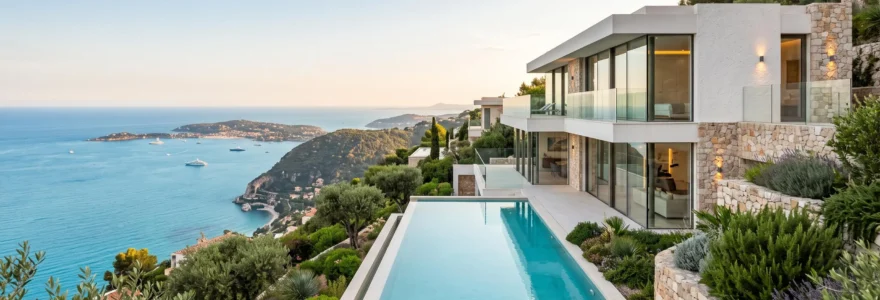
Architectural typology shapes guest experience in ways most online listings obscure. Waterfront estates prioritize panoramic Mediterranean vistas and beach proximity, typically showcasing contemporary design with expansive glass facades. Inland bastides emphasize seclusion, extensive private grounds, and traditional Provençal architecture—stone walls, terracotta tiles, centuries-old olive groves. Understanding this distinction prevents misaligned bookings driven by visual appeal alone.

Typology trade-offs: waterfront estates vs inland bastides
Waterfront estates: Panoramic Mediterranean views, beach proximity, contemporary architecture, premium pricing (€100,000 to €150,000 weekly peak season), design emphasizing glass and outdoor-indoor flow.
Inland bastides: Maximum seclusion, extensive private grounds, traditional Provençal architecture (stone, terracotta), complete privacy. Weekly rates €50,000 to €100,000, prioritizing quieter aesthetic over coastal panoramas.
Selection methodology: what distinguishes truly curated portfolios
The distinction between genuine curation and aggregation manifests first in portfolio composition. Industry evaluation frameworks such as the Forbes Travel Guide criteria—assessing properties against 900 objective standards with 75% weighting on service quality—provide a useful benchmark. Agencies managing focused portfolios of 20 to 50 handpicked estates signal selective quality control, whereas inventories exceeding several hundred properties typically indicate aggregation models prioritizing volume over vetting depth.
Multi-decade market presence correlates strongly with curation credibility. Established agencies—such as those specializing in luxury villa rental in the French Riviera—with 15-20+ years operating history demonstrate sustained client relationships and repeat bookings, reliable indicators of delivery on luxury promises rather than marketing claims.
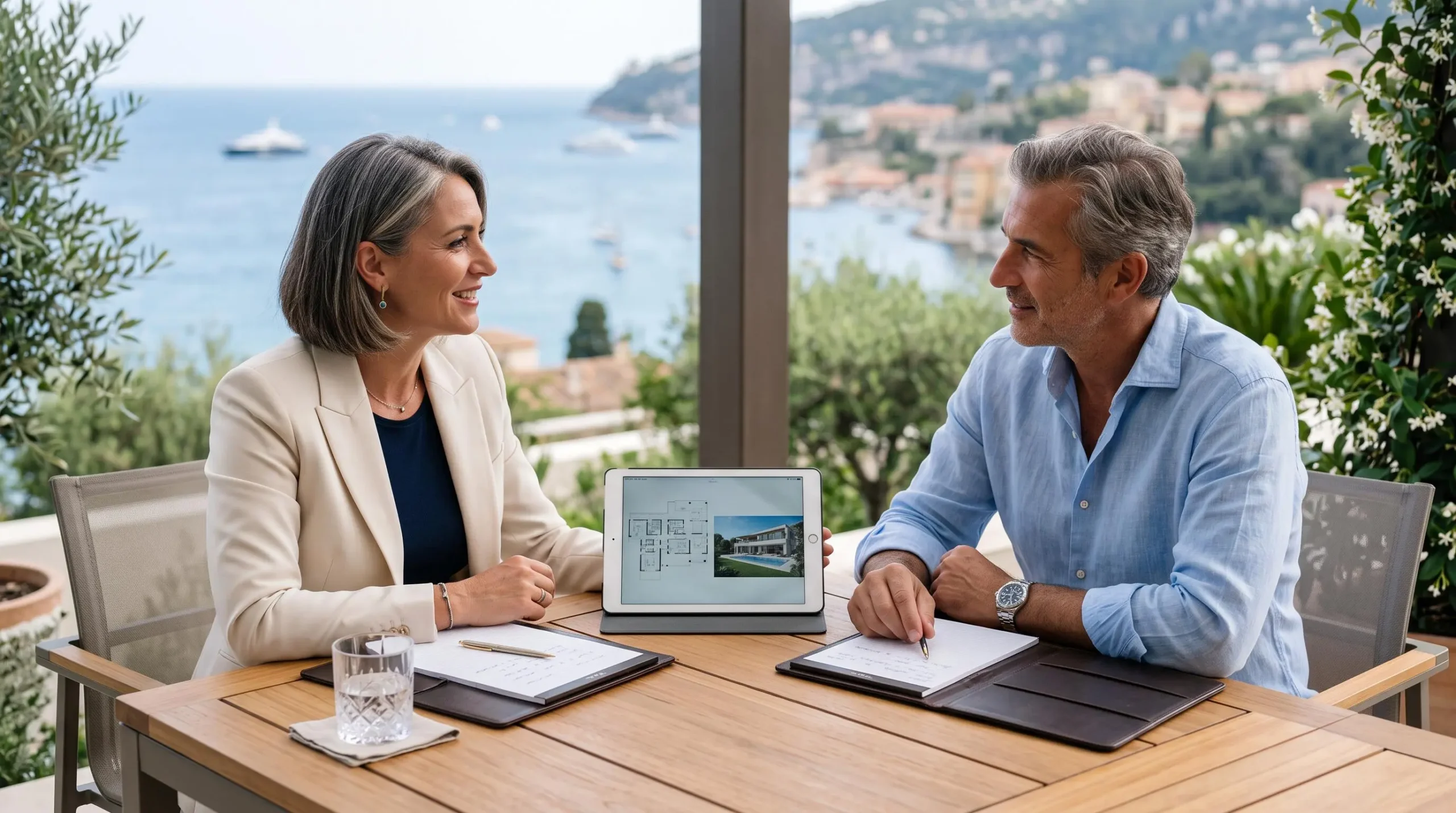
The conversation-first approach distinguishes premium providers most clearly. Vetted agencies initiate consultation dialogues before presenting properties, clarifying guest requirements—group size, privacy priorities, accessibility needs, aesthetic preferences. Platforms offering instant online booking without prior consultation prioritize transaction speed over bespoke matching. If an agency’s website features « book now » buttons without requiring initial contact, that signals aggregation rather than advisory service.
In-person property evaluation remains the foundation of quality assurance. Photographs cannot convey ceiling height adequacy, natural light quality throughout the day, or spatial flow between zones. Curated agencies conduct site inspections verifying architectural finishes, furniture condition, appliance functionality, and staff accommodation quality—which directly impacts service delivery.
Service architecture: concierge capabilities that define exceptional stays
The most common misstep involves selecting properties based solely on amenity checklists and visual appeal, overlooking the critical differentiator: concierge coordination quality. A cinema room or infinity pool represents static infrastructure. Service-level architecture—coordination of chef sourcing, boat charters, wellness practitioners, and bespoke experiences—determines whether a stay meets five-star hospitality standards.
Five-star hotels operate with staff-to-room ratios between 1.5 and 2 employees per room, as documented in hospitality industry service benchmarks, enabling round-the-clock coordination. Premium villa concierge services mirror this sophistication—sourcing private chefs with dietary customization capacity, arranging yacht charters with crew vetting, coordinating spa therapists, securing reservations at restaurants requiring multi-month advance booking—while preserving privacy unique to private estates.

Case illustration: coordination capacity under pressure
A family of six books a Ramatuelle waterfront estate for mid-July, expecting standard concierge capabilities. Three days before arrival, the wife develops severe shellfish allergies requiring complete menu redesign, the teenage daughter requests daily yoga instruction, and the husband needs same-day yacht charter for a surprise anniversary celebration. Generic platforms would provide local contact lists, delegating coordination to guests.
Vetted agencies demonstrate their value in precisely these moments. Within 18 hours, the agency’s concierge team sources a Michelin-trained chef specializing in allergen-free Mediterranean cuisine, secures a certified yoga instructor with availability throughout the week, and arranges a 60-foot yacht charter with crew for the following afternoon—complete with champagne service and coastal route planning. This responsiveness signals established vendor networks and client-facing expertise impossible to replicate through online recommendations.
The service spectrum typically encompasses culinary (private chefs, sommelier consultation), wellness (massage therapists, yoga instructors, fitness trainers), exploration (guided vineyard visits, art gallery access), and mobility (chauffeur services, helicopter transfers, boat coordination). Experienced luxury travelers recognize that service responsiveness and provider relationships separate exceptional coordination from reactive problem-solving.
Accessing vetted agencies: your informed approach
Identifying trustworthy booking channels begins with observable signals. Portfolio size between 20 and 50 properties suggests selective vetting. Multi-decade market presence—15 to 20+ years operating in the same geographic market—demonstrates sustained client relationships and repeat business. Communication approach matters critically: agencies initiating consultation conversations before presenting properties signal bespoke matching methodology, whereas platforms prioritizing instant online booking reveal transactional models.
Red flags for generic aggregators include inventories exceeding 500 properties, absence of consultation offerings, and generic platform interfaces resembling travel marketplaces. The most reliable indicator remains the willingness to discuss your specific needs before proposing properties—a hallmark of curation-focused service.
Booking timeline strategy directly impacts inventory access and service customization capacity:
-
Prime properties for July-August secured by repeat clients. Full concierge customization capacity, complete portfolio access. -
Secondary inventory available, premium service providers still accessible, good selection remaining. -
Limited selection, reduced customization flexibility, vetted agencies may have capacity constraints. -
Primarily last-minute cancellations or standard-tier properties, minimal bespoke service coordination feasible.
Geographic concentration, curation methodology, and service architecture converge to define exceptional Riviera villa stays. The Saint-Tropez peninsula remains the Côte d’Azur’s premium estate epicenter, yet accessing this inventory demands more than budget—it requires engaging vetted agencies demonstrating proven curation capabilities through focused portfolios, multi-decade market presence, and conversation-first booking approaches.
Rather than concluding, consider this question: does your current villa search strategy prioritize the dimensions that actually determine experience quality—portfolio curation rigor, concierge coordination depth, and advisory service approach—or do online listings and instant booking platforms still dominate your exploration? The distinction between these approaches determines whether your Riviera stay delivers genuine luxury or merely occupies expensive real estate.
Initiate consultation conversations 12 to 18 months before your intended travel dates, particularly for July and August. This timeline provides access to prime inventory and full concierge customization capacity, transforming advance planning from inconvenience into competitive advantage.